

Inside Veneto: How DOCG Prosecco producers are elevating quality and sustainability
A few twists and turns through the Veneto hills. This trip was about seeing what makes the two DOCG zones of Conegliano and Valdobbiadene so distinctive in style, and how some of our key partners are shaping the future of high-quality Prosecco.
La Farra – La Farra di Soligo – Valdobbiadene
After an early start from Stansted – the 6.10 a.m. flight to Venice- I was met by Adamaria Nardi of La Farra, a small family-owned Prosecco producer in Farra di Soligo. Adamaria, who manages the commercial side of the business, runs the winery with her brothers, Innocente, the winemaker, and Guido, the cellar master and agronomist. Together, they oversee every stage of production, from the vineyard to the bottle.
By mid-morning, I was winding north through the Veneto hills towards Valdobbiadene on the western edge of the DOCG zone. From there, we climbed the steep, narrow roads of Farra di Soligo to about 350 metres, looking out over a patchwork of hillside plots and the plains below. The shallow, limestone-rich soils here drain freely, giving the wines precision and lift.
The DOCG Valdobbiadene is sourced from four subzones across the Valdobbiadene hills, blending richness from San Pietro di Feletto, body from Pieve Soligo, aromatic lift from Farra di Soligo and freshness from Follina.
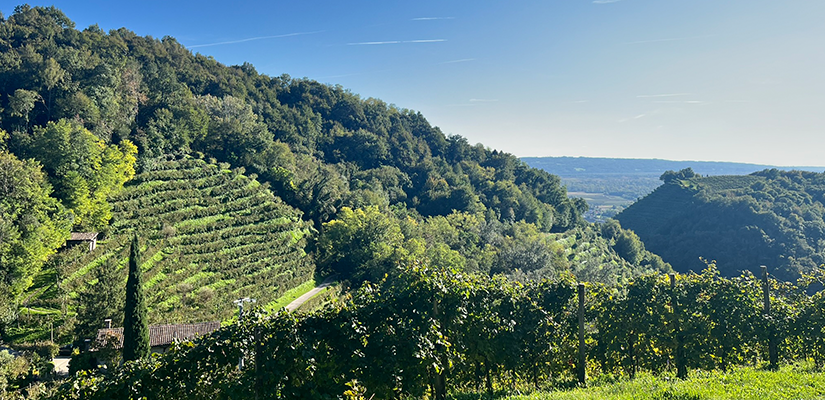
La Farra focuses almost exclusively on Conegliano-Valdobbiadene DOCG Prosecco, crafting wines that balance fruit weight, freshness and texture. Though not certified organic, they farm with minimal intervention and use as gentle treatments as possible. Fruit is, of course, hand harvested. Pressing is gentle, with only the Fiore (first press juice) used for their best cuvées. A small proportion of the press wine is blended back later for aromatic complexity. The must is lightly filtered before fermentation, and the base wines rest on lees for several months for added depth and intensity.
The DOCG wines are fully sparkling, typically 11% ABV and around 10 g/L residual sugar. Base wines spend three months on lees, while the Rive wines remain for four to six months, with very quick daily batonnage to enhance texture. The Rive is bottled at 5 g/L residual sugar, giving a taut, mineral edge.
We tasted across the range:
- Rive di Farra di Soligo Millesimato Valdobbiadene
- Superiore DOCG Extra Brut and Extra Dry
Millesimato Valdobbiadene Superiore DOCG Brut and Extra Dry - Prosecco Treviso DOC Brut
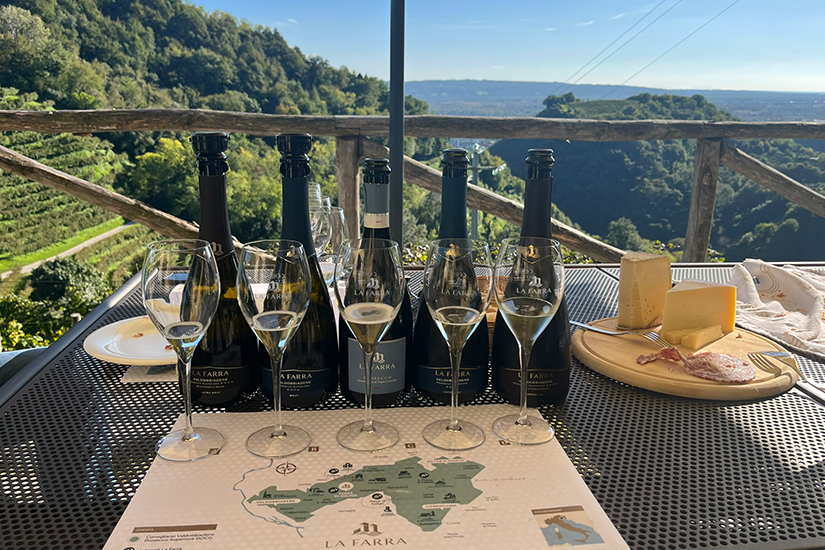
Local organic salumi and cheeses were the perfect reminder that Prosecco, at its best, is a key component of the region’s gastronomy and culture.
Giavi – Conegliano
After leaving La Farra, I drove east to Conegliano, where Giulia from Giavi met me to explore the vineyards.
These hillside plots sit just above the town itself, offering views across Conegliano and the valleys beyond. Here, the soils change to glacial clay rich in morainic deposits, creating fuller, fruit-driven wines compared with the taut precision of the more calcareous Valdobbiadene. The distinctive ciglioni grass terraces ripple across the slopes, defining the UNESCO-protected landscape.
A short drive took us to the winery, purpose-built a decade ago under the CasaClima Wine Protocol. Powered 90% by solar, full water-recycling, certified SQNPI, and part of the EnoBEE project (which aims to reintroduce bees into the vineyard), it exemplifies sustainable Prosecco production.
Giavi is made at Biancavigna by Elena and Enrico Moschetta and is a small part of their annual 600,000-bottle production; all DOCG fruit is harvested by hand and gently pressed (to 2 bar maximum). Fermentation occurs at 16–17 °C with selected indigenous yeasts, and base wines rest cool before rackings and secondary fermentation.
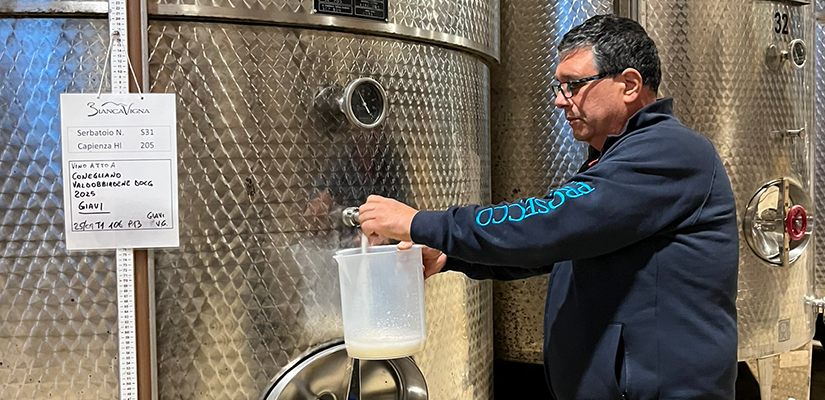
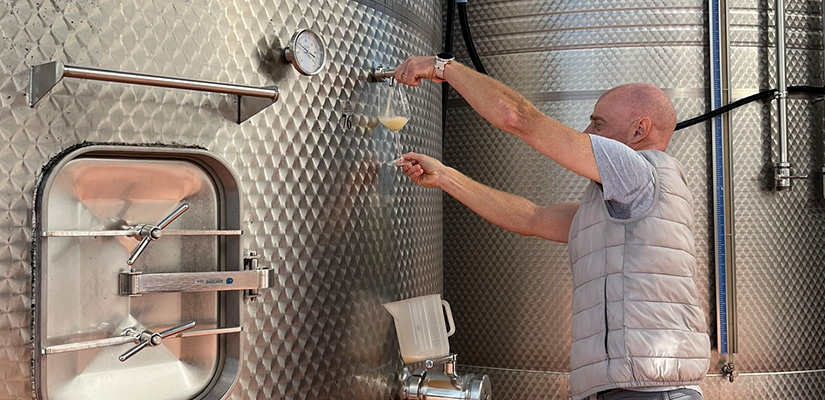
Tasting the base wines directly from the tank was a highlight. The Giavi lots were floral yet restrained, the organic base wine was more expressive. Enrico believes the small oxidative effect of copper in organic farming accelerates aromatic development, a fascinating detail rarely discussed.
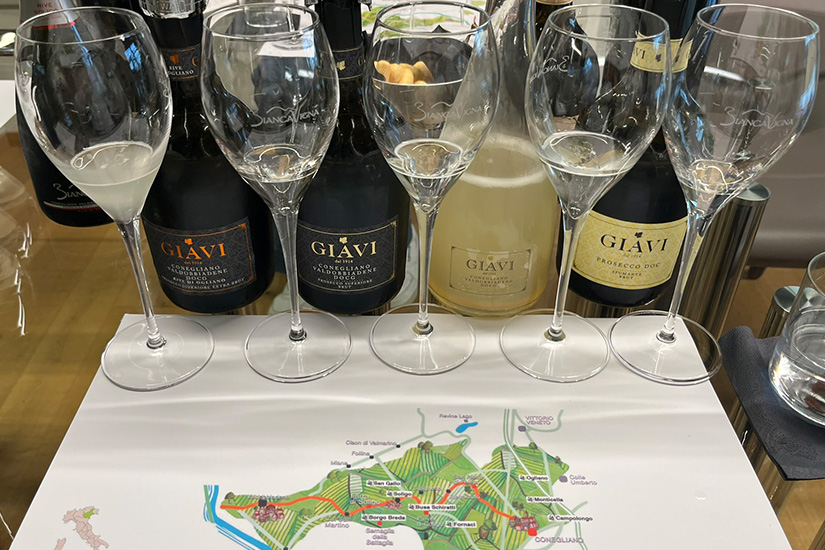
Before bottling, wines are cold-stabilised at –5 °C. We also sampled an unfiltered Spumante and six finished wines, including the Ogliano Single Rive (3 g/L RS)—clay-based, weightier than La Farra’s Rive yet with a crisp finish—and a new Col Fondo Prosecco DOCG (2024) at just 0.5 g/L sugar. Bottled on its lees in a clear bottle with a compostable protective wrap, it can be poured clear or cloudy – a potentially exciting addition.
Mabis Biscardo – Soave
Lastly, I headed west to Soave, where I stayed in a small guesthouse that offered views of the castle and the vineyards surrounding the walled town.
I spent the day with Martino Biscardo—part of the three-generation family team of Maurizio, Martino and Maddalena Biscardo—one of Alliance's longest-standing partners. We visited three wineries across the region that produce the wide Biscardo range. I tasted everything from entry-level to ultra-premium—while trying not to show any fear as Martino drove at breakneck speed through the picturesque and rolling hills of Soave!
From tank, the entry-level Pinot Grigio for our private label Orsino was remarkably fragrant, fresh and textured, a reminder of the quality of fruit that underpins this value-driven wine. The vineyards, still healthy and green, include hillside sites as well as a unique valley-floor plot that benefits from a cooling wind rushing through a natural break in the hills. This airflow helps keep disease pressure low, a key advantage in a year when many regions faced significant mildew challenges.
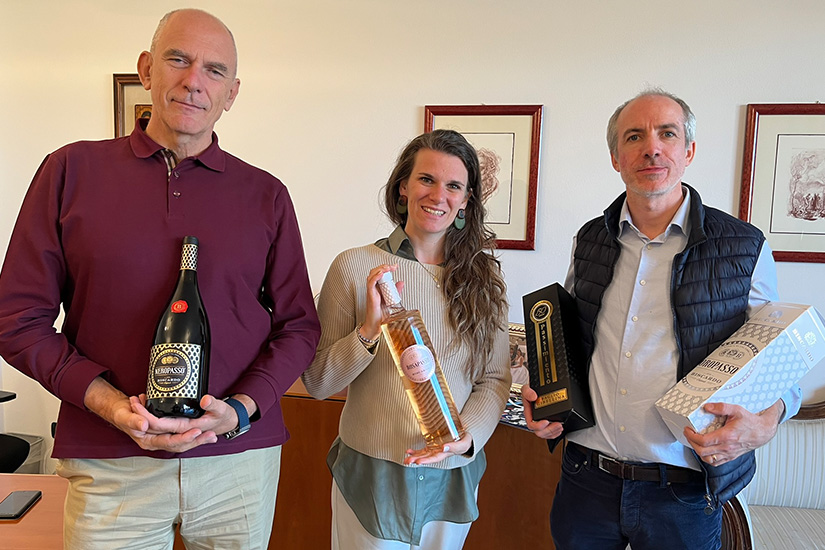
We then worked our way up to the Biscardo Amarone Riserva 2018, where the hallmark "pure enjoyment" style shone through every wine. But perhaps the highlight of the day was lunch, when we tasted the Biscardo Millesimato 2024 Prosecco DOCG Conegliano Valdobbiadene, recently recognised as one of the Best Proseccos in the World with a "Best of Show Prosecco" award at Mundus Vini 2025. If you want to know the secret to what makes this wine so good, you will have to ask Martino himself!
This wine—beautifully textured, dry Brut style (8 g/L residual sugar)—showed rich fruit, a long, fine mousse, and lifted perfume supported by fresh acidity, carrying through to a persistent finish. It was a perfect match for scallops, followed (naturally) by a glass of Biscardo Soave Classico to match the salt-baked sea bass.
Reflections
From Valdobbiadene’s stony slopes to Conegliano’s clay hills and finally Soave’s volcanic ridges, the journey showcased Veneto’s diversity and dynamism. Each producer, La Farra, Giavi, and Biscardo, expresses their terroir with clarity and pride, and together they highlight why Prosecco DOCG remains one of the world’s most compelling sparkling wine regions.
By Beans Boughton MW, Buyer, Alliance Wine.


